What actually separates a real surge protector from a fancy extension cord
A power strip with no surge-protection circuitry just adds outlets. A true surge protector contains metal oxide varistors (MOVs) that clamp excess voltage before it reaches your gear. The problem: the label "surge protector" is slapped on products that range from genuinely capable to nearly useless, so you have to read the specs.
Joule rating is the first number to check. It measures how much surge energy the MOVs can absorb over their lifetime. A rating under 400 joules is marginal — enough for a lamp, not for a television or a computer. For desktop electronics, shoot for 1,000 joules or more; for a home theater or a workstation, 2,000-plus is a reasonable target. The catch: MOVs degrade with each surge they absorb, silently, until they stop protecting at all. A quality protector has an indicator light that goes dark when the MOVs are spent. If yours lacks that light, replace it every few years regardless.
Clamping voltage is the second number. It's the voltage level at which the MOV kicks in and diverts the surge — lower is better. Look for 400 V or below (the UL 1449 standard defines this as the "suppressed voltage rating"). A unit with a clamping voltage of 500 V or higher lets more of the surge through before reacting, giving your electronics less protection.
Response time is often marketed aggressively but matters less in practice — quality MOVs respond in nanoseconds, and the real-world difference between competing units at that scale is negligible. Focus on joules and clamping voltage instead.
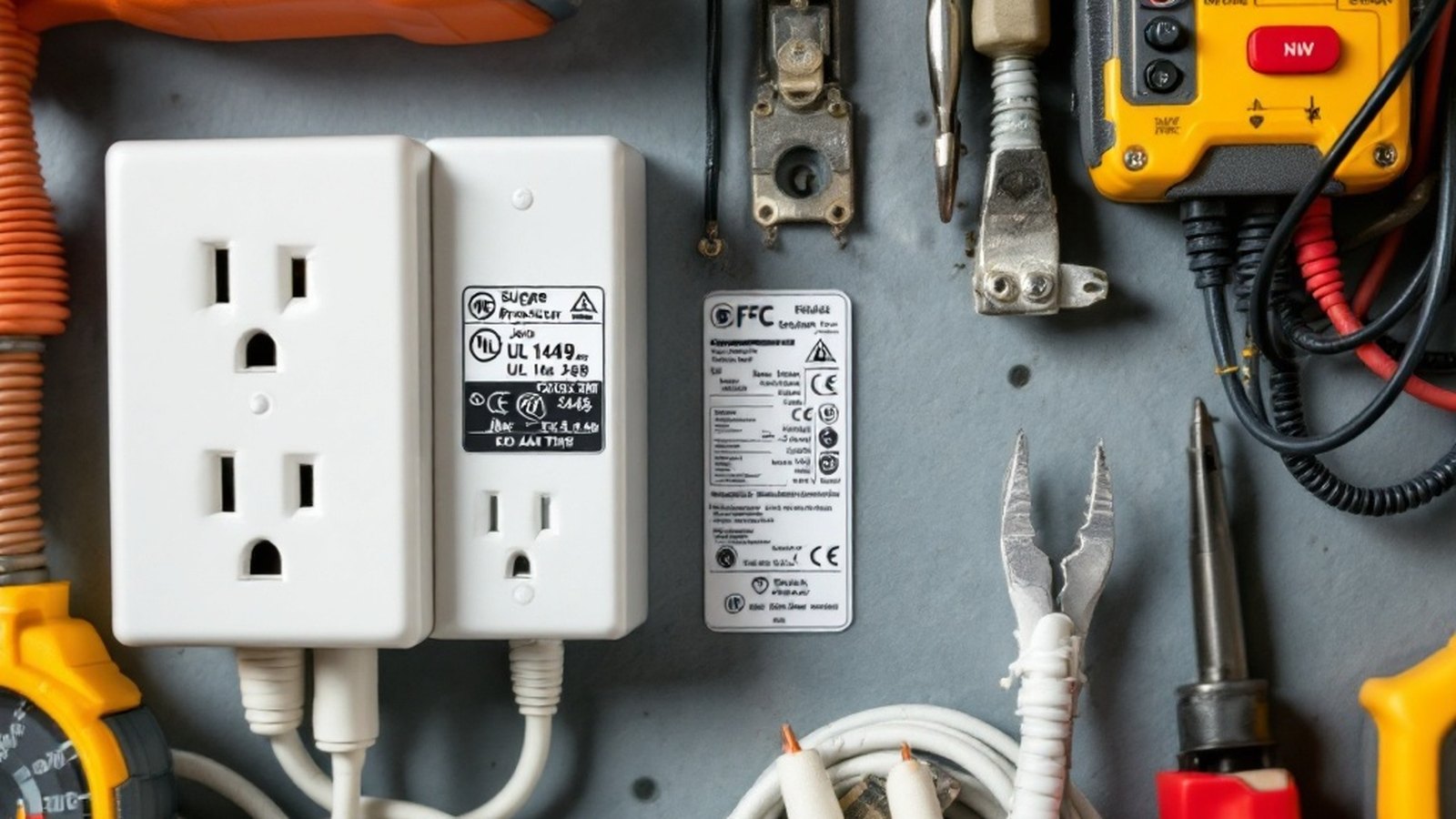
One more thing: the UL 1449 listing. A surge protector carrying this mark has been independently tested to the standard that actually governs surge suppression. If a product doesn't show it, pass.
For sensitive equipment — a NAS drive, a medical device, a high-end audio setup — consider pairing a point-of-use protector with whole-house surge protection at the panel. The two layers catch what the other misses.
Referenced throughout: UL (Underwriters Laboratories) — the independent safety-testing and certification organization whose UL 1449 standard covers surge protective devices.