What You Can Safely Handle
Plenty of electrical work is genuinely DIY territory. Replacing a standard outlet or switch, installing a new light fixture on an existing circuit, swapping a worn cord — these are tasks a careful homeowner can do safely, armed with a non-contact voltage tester and the habit of confirming the circuit is dead before touching anything. Testing and resetting a GFCI outlet, reading your breaker panel from the outside, and resetting a tripped breaker are all fair game too. So is plugging a surge protector into an existing outlet.
The through-line is this: you're working on branch circuits, at outlets or fixtures, downstream of the breaker. That's the zone where a homeowner with basic skills and the right tools can operate safely.
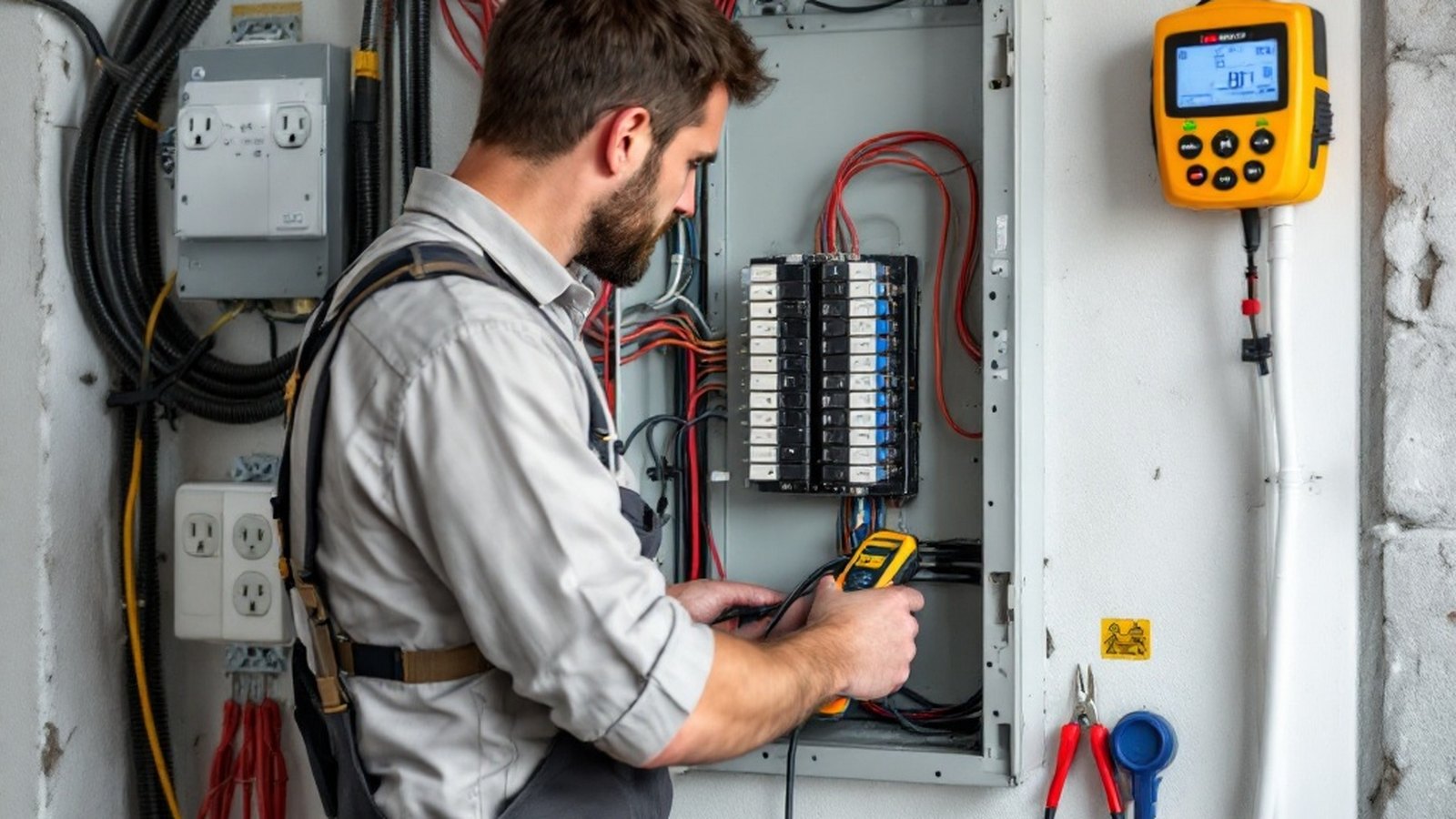
Work That Always Belongs to a Licensed Electrician
Cross into any of the following territory, and it's time to make a call.
The panel and service entrance. The wires feeding your main panel from the utility are energized even with the main breaker off — there is no way for a homeowner to de-energize them. Work inside a panel, replacement of a main breaker, and anything touching the service entrance is licensed-electrician territory, full stop.
New circuits. Running a new circuit from the panel — for a kitchen appliance, an EV charger, a workshop — almost always requires a permit and inspection. That's not bureaucratic friction; it's the mechanism that ensures the work is safe and your homeowner's insurance stays valid.
Aluminum wiring. Homes built roughly between 1965 and 1973 may have aluminum branch-circuit wiring, which requires specific connectors and devices rated for it. If you suspect you have it, have a licensed electrician assess the whole system rather than patch individual outlets.
Anything that keeps tripping, sparking or smelling. A breaker that trips repeatedly, an outlet that sparks on contact, a burning smell with no obvious source — these are symptoms, not the problem itself. Diagnosing the underlying fault safely requires training and test equipment beyond a basic outlet tester.
Anything you're not sure about. That's the real rule. Electrical work fails at the margins — the junction box you didn't know was there, the double-tapped breaker, the missing ground. Uncertainty is the correct reason to stop.
A licensed electrician isn't just a last resort; for the work above, they're the right tool for the job. When in doubt, call one.
Anything inside the panel, a new circuit, or a fault you can't explain belongs to a licensed electrician — there's no shame in making the call.