The short list of things that actually matter
Electrical safety looks complicated until you realize how few fundamentals are actually in play. A safe home has protection against shock, protection against fire-starting faults, a reliable path to ground, a panel you can read, and a handful of good habits. That's the whole list. Everything else is refinement.
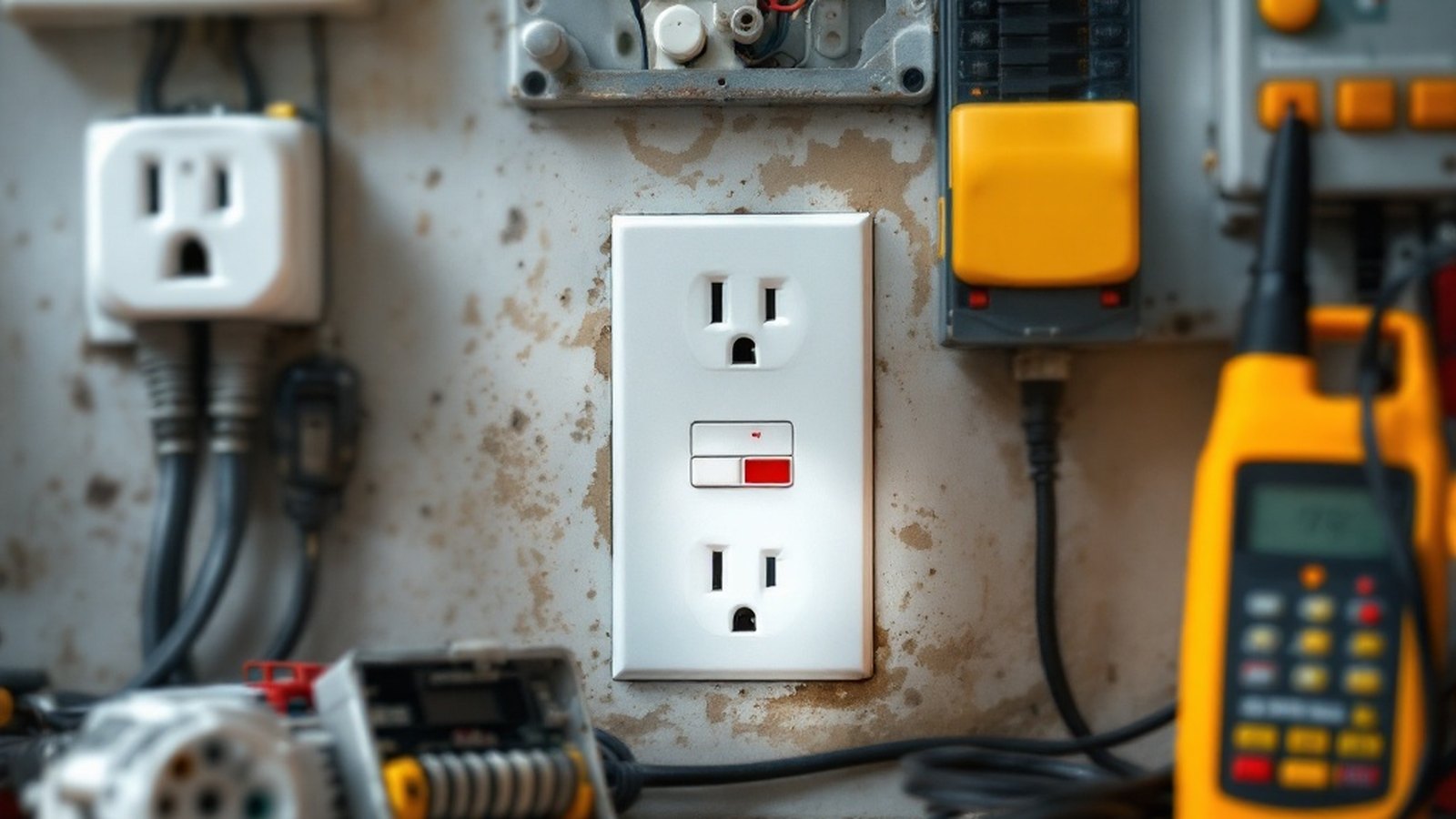
Start with GFCI protection. A ground-fault circuit interrupter monitors the current flowing out on the hot wire and back on the neutral. If those two numbers differ by even a few milliamps — a sign that current is finding an alternate path, possibly through a person — the device trips in about one-fortieth of a second. That speed is what saves lives. The National Electrical Code has required GFCI receptacles or breakers in bathrooms, kitchens, garages, crawl spaces, unfinished basements, and outdoor locations for decades; if your house predates those requirements or has been partially renovated, gaps are common. The test button on every GFCI outlet should click off cleanly and the reset should bring it back; testing that takes thirty seconds and is worth doing annually.
AFCI protection addresses a different hazard entirely. An arc-fault circuit interrupter listens for the electrical signature of a dangerous arc — the kind that happens inside a damaged cord pinched under furniture, or in wiring that has been nicked or aged. Arcs don't necessarily trip a standard breaker because they don't always draw enough current; they just generate heat, quietly, until something ignites. AFCI breakers are now required by the NEC in most living spaces — bedrooms, living rooms, hallways — and they replace a standard breaker in the panel. If you're not sure whether your circuits have this protection, look for the test button on the face of the breaker itself; a standard thermal-magnetic breaker won't have one.
Grounding is the silent partner behind both of these systems. The bare or green ground wire in a circuit gives fault current a low-resistance highway back to the panel, which causes the breaker to trip quickly and decisively rather than leaving a shock hazard energized. Houses built before the mid-1960s often have two-wire wiring — hot and neutral, no ground — which is safe to use but limits what you can do with it. You cannot simply install a three-prong outlet on a two-wire circuit and call it grounded; that's a code violation and a false sense of security. The legitimate options — running new cable, installing a GFCI outlet with a "no equipment ground" label, or having an electrician assess whether metal conduit provides a usable ground path — all require honest diagnosis first.
Reading your house as a set of circuits
Here's the mental model that makes electrical safety manageable: your house is not one big electrical system, it's twenty or thirty separate circuits, each protected by its own breaker, each serving a defined area or appliance. When you read your breaker panel and see the label for "Master Bed / Hallway" on a 15-amp single-pole breaker, you know exactly what that circuit does, what its limit is, and what to do if it trips. A well-labeled panel turns a mysterious metal box into a navigation tool.
Each circuit has a job. Dedicated circuits — typically 20-amp — serve the dishwasher, refrigerator, microwave, and washing machine, while an electric dryer needs its own 30-amp, 240-volt circuit, because those appliances need the headroom. General-purpose 15-amp circuits handle lighting and receptacles in living spaces. Kitchen countertop receptacles share two dedicated 20-amp circuits by code, because countertops are where small appliances cluster and loads add up fast. Understanding this architecture means you can think clearly about why a breaker trips, whether a particular outlet is appropriate for a given load, and where protection is or isn't in place.
The habits that cost nothing
Once the hardware is right, safe electrical use is mostly a matter of a few durable habits. Don't run extension cords under rugs or through doorways where they can be pinched and damaged — use them as temporary solutions only. Don't overload a power strip by treating it as a permanent extension of the wall; a power strip is not a surge protector unless it's rated as one. If an outlet feels warm, if a breaker trips repeatedly for no clear reason, or if you smell something burning near a switch or panel, those are warning signs — things that mean stop and investigate, not ignore and reset.
Know what you can safely do yourself: swap a receptacle, test and reset a GFCI, replace a standard light switch, reset a tripped breaker. Know where to stop: anything inside the panel beyond flipping a breaker, anything touching the service entrance wires, anything requiring a permit. That line exists not because homeowners can't learn the skills but because the consequences of a mistake on the wrong side of that line can be severe and irreversible.
Electrical safety is mostly about keeping the circuits you have in good working order and not asking them to do things they weren't designed for. Think of it that way — one circuit at a time — and it's entirely manageable.
anything inside the panel, a new circuit, or a fault you can't explain belongs to a licensed electrician — there's no shame in making the call.
Referenced throughout: National Electrical Code (NEC) — the model code adopted by most US jurisdictions.