What the Ground Wire Is For
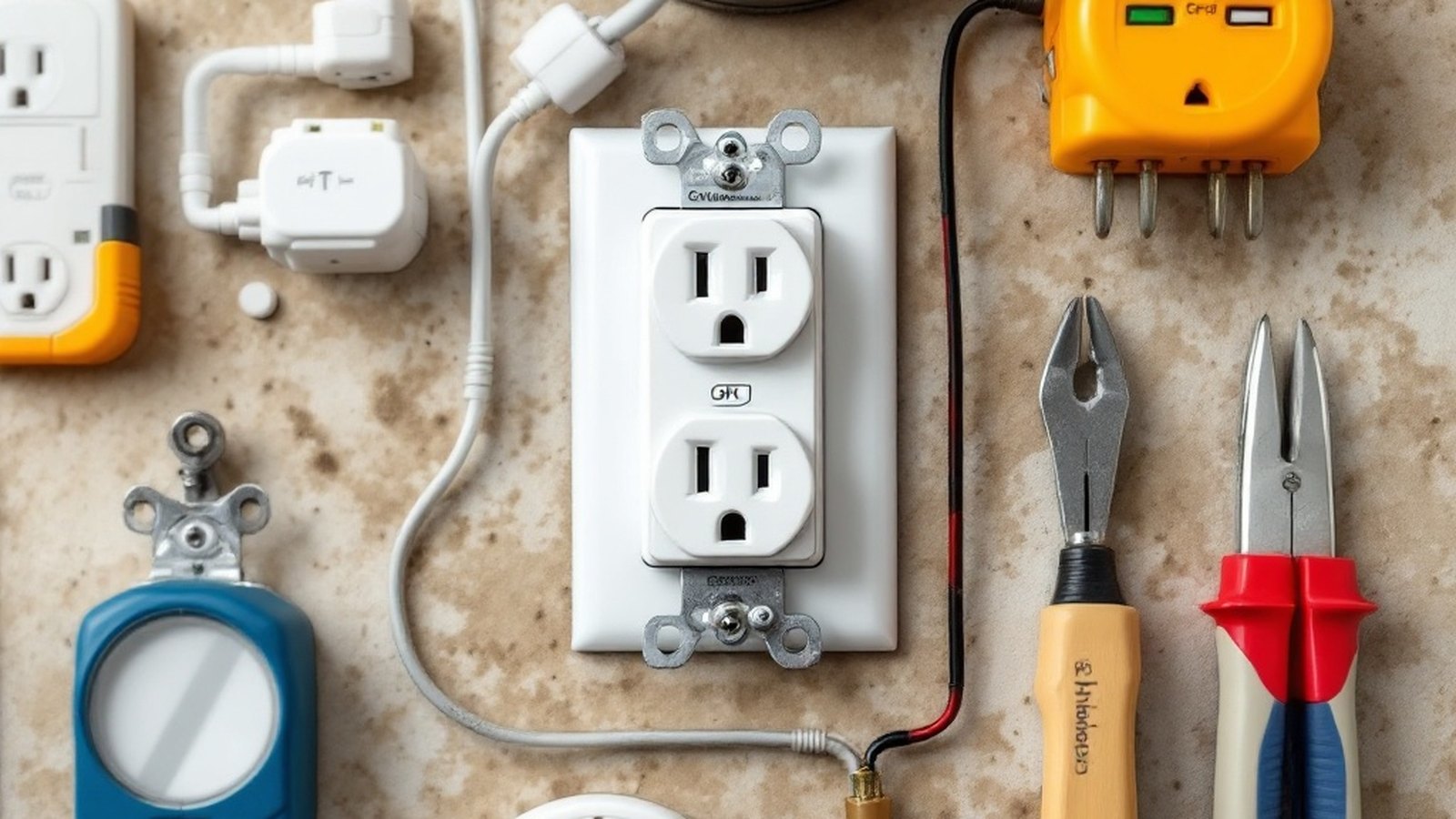
Every outlet in your home has two or three slots. The two vertical slots are hot and neutral — that's the working pair, the path current travels out on and returns on during normal operation. The third slot, the round one at the bottom, is the ground. Under normal circumstances, no current flows through it at all. That's the whole point: the ground wire is a dedicated emergency path, and like a fire exit, its value is in being there when things go wrong.
Here's what "wrong" looks like. Suppose a wire inside your toaster frays and touches the metal chassis. Now the chassis is energized — it's sitting at 120 volts relative to the floor you're standing on. Touch it, and you complete a circuit straight through your body. With a properly grounded outlet, though, the chassis is connected directly back to the panel through the ground wire. That fault current rushes down the much lower-resistance metal path instead of waiting for a person, and the surge is large enough to trip the breaker almost instantly. The ground wire doesn't prevent the fault; it controls where the current goes and forces the breaker to respond.
The wire itself is typically bare copper or green-insulated, and it runs from every grounded outlet and metal box back to the grounding bar in your panel. There, it connects to a grounding electrode — usually a ground rod driven into the earth beside the house, the metal water service pipe where it enters the building, or both — giving fault current an unambiguous reference to true earth.
Grounding vs Bonding — and Grounding vs GFCI
Two related terms trip people up: grounding and bonding. Grounding connects your electrical system to the earth. Bonding ties conductive metal parts together — gas piping, water piping, the panel enclosure, ductwork — so they all share the same electrical potential. Bonding prevents a dangerous voltage difference between two things you might touch simultaneously (a faucet and an appliance, say). The two concepts work as a team: bonding keeps everything at the same potential; grounding anchors that potential to earth.
Grounding is also frequently confused with GFCI protection, but they solve different problems. A ground wire creates a low-impedance fault path to trip a breaker on a hard fault — a wire touching metal. A GFCI senses a much smaller imbalance, as little as 5 milliamps, between the hot and neutral conductors and cuts power in about 1/40th of a second. GFCIs are designed to catch the current that might be flowing through a person — a slower, smaller leakage that would never trip a breaker. The two protections are complementary, not interchangeable.
Why a Missing Ground Is Worth Fixing
Older homes wired before grounded outlets became standard — three-prong receptacles have been required for new construction since the 1962 National Electrical Code — commonly have two-slot ungrounded outlets. They work fine for lamps and simple loads. But plug in a computer, an appliance with a metal enclosure, or anything with a three-prong cord, and you've lost the fault protection that third prong is meant to deliver. The appliance chassis has nowhere safe to route fault current.
A common workaround you'll see is the "cheater plug" — a three-to-two adapter. Unless the adapter's ground pigtail is connected to a verified ground, it accomplishes nothing protective; it just makes a three-prong plug fit a two-prong outlet.
The correct fixes, in ascending order of permanence: replace an ungrounded outlet with a GFCI outlet (permitted by the NEC as a code-compliant upgrade, required to be labeled "No Equipment Ground"), run a new grounded circuit from the panel, or where wiring conditions allow, use a separate equipment grounding conductor to establish a proper ground. A GFCI outlet in an ungrounded box still protects people from shock — it will still sense ground-fault current and trip — but it doesn't provide the equipment-grounding path that protects sensitive electronics and metal enclosures. It's a meaningful safety improvement, not a full substitute.
How do you know if your outlets are grounded? A plug-in outlet tester — a three-dollar device with indicator lights — will tell you in seconds. It plugs into any standard outlet and shows correct wiring, missing ground, reversed polarity, or open neutral. Worth having in your kit.
Running new grounded circuits or any work inside the panel is electrician territory. But testing your outlets, understanding what you find, and knowing which fix applies — that's yours to own. The ground wire may be the quietest conductor in your walls, but it earns its place every time something goes wrong.
Anything inside the panel, a new circuit, or a fault you can't explain belongs to a licensed electrician — there's no shame in making the call.
Referenced throughout: NEC (National Electrical Code) — the model code adopted by most US jurisdictions.