Keep Water and Outlets Separated
The bathroom is where electrical rules get serious. Water conducts electricity, and a shock in a wet environment can be fatal — which is why the National Electrical Code requires GFCI protection on every receptacle in any bathroom, period. No exceptions for older homes, no grandfathering if you're renovating. If your bathroom outlets aren't GFCI-protected, that's the single most important fix to make.
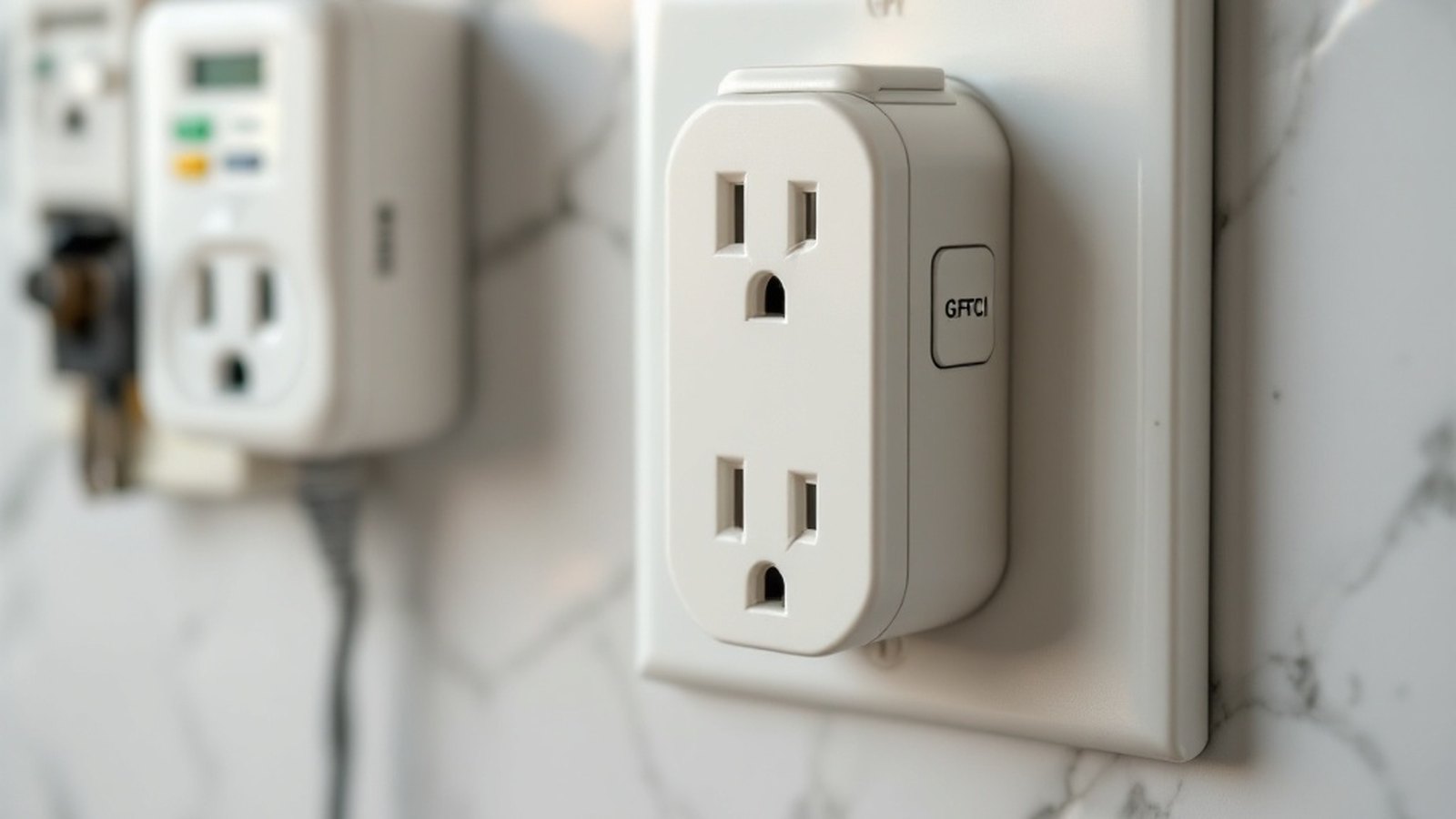
A GFCI outlet — or a standard outlet fed by a GFCI breaker — monitors current flow and cuts power in about one-fortieth of a second if it detects even a small imbalance, the kind caused by current finding a path through a person. Test yours monthly: press the TEST button, confirm power cuts off, press RESET to restore it. If it won't reset or doesn't trip on test, replace it.
Beyond the outlets themselves, the NEC also prohibits any receptacle from being installed inside a tub or shower space or within reach of someone in the tub. The rule is practical: an energized device dropped into bathwater can kill before a breaker has time to respond.
Light fixtures and exhaust fans over tubs and showers must be rated for damp or wet locations — standard fixtures aren't built to handle the humidity. Recessed lights in those zones need a specific wet-location listing, marked on the trim. If you're replacing a fixture in a shower zone, check the label before you buy.
Use Appliances Safely
Hair dryers, curling irons, and electric shavers are the everyday risk. The rule is simple: keep them away from water while powered. That means not balanced on the edge of a sink, not plugged in near a running shower, and never anywhere near a filled tub. A plugged-in dryer that falls into water is dangerous even if it's switched off — unplug it when you're not actively using it.
Portable electric space heaters belong in the bathroom only if they carry a UL listing for bathroom use and are kept well away from water sources. Most standard heaters are not rated for bathroom humidity.
When in doubt about any electrical work in a bathroom — rewiring, adding outlets, swapping a fixture — call a licensed electrician. Damp-location work that requires a permit is not a corner to cut.
Anything inside the panel, a new circuit, or a fault you can't explain belongs to a licensed electrician — there's no shame in making the call.
Referenced throughout: National Electrical Code (NEC) — the model code adopted by most US jurisdictions.