Mind the moisture, watch the load
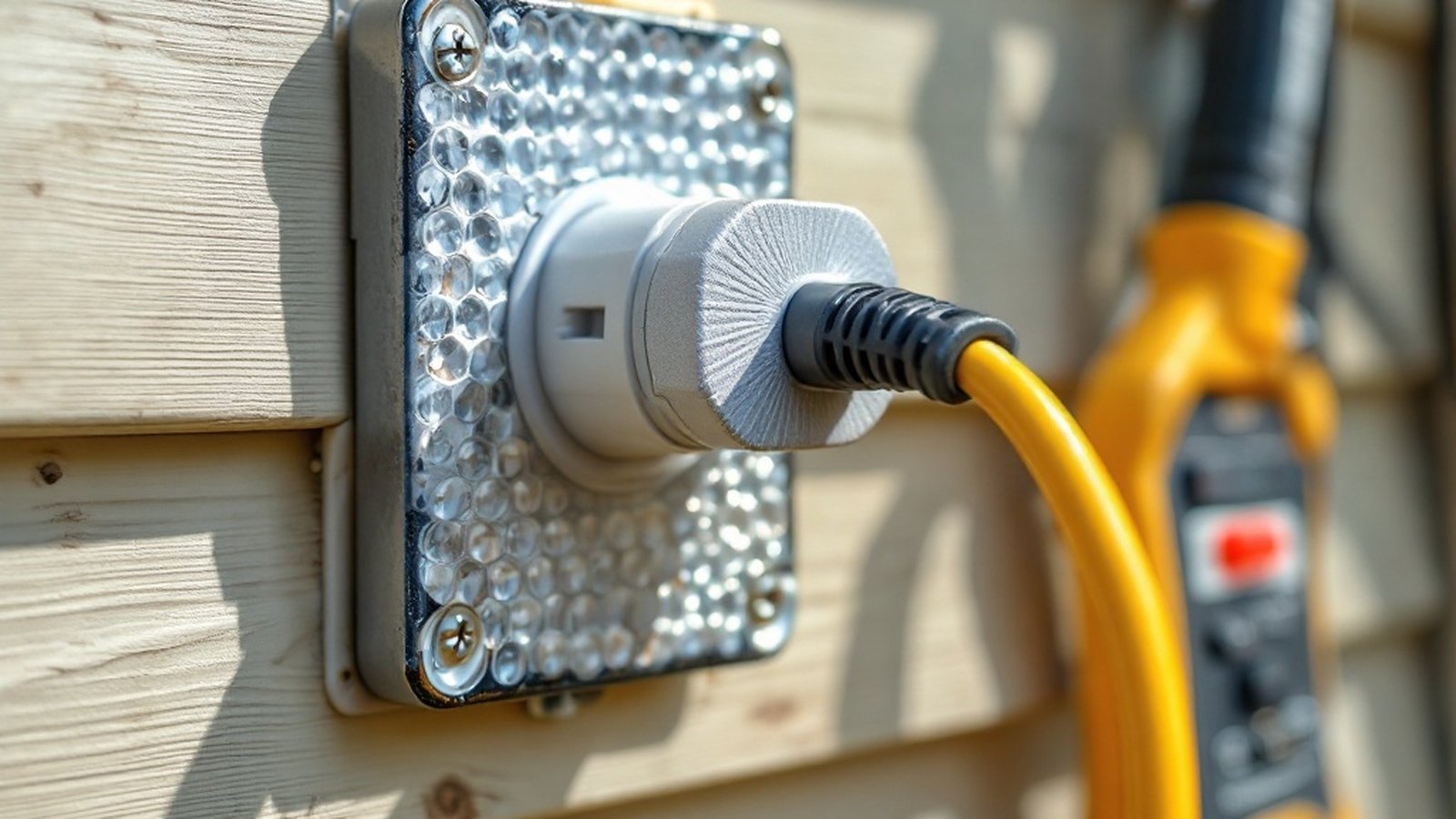
Every outdoor receptacle needs two things: GFCI protection and a weather-resistant (WR) rating with an in-use cover — the kind that seals around a plugged-in cord rather than just flipping shut when nothing's connected. Without that cover, rain gets into an energized outlet. The NEC has required GFCI protection for outdoor receptacles since 1973, and in-use covers became standard practice for any location exposed to the elements. If your exterior outlets still have the old flip-lid style, swap them for bubble covers; it's a straightforward outlet replacement any confident homeowner can handle.
Garages follow the same rule. Every 120-volt receptacle in an attached or detached garage requires GFCI protection — no exceptions, regardless of how high up the wall it's mounted. That workshop outlet powering your table saw is included. Garages also collect dust, sawdust, and moisture, all of which can work their way into unprotected connections over time, so check outlet faces occasionally for discoloration or cracking.
Extension cords deserve their own moment of discipline. Outdoors, use only cords rated for outdoor use (look for a "W" in the designation, such as SJTW). Never daisy-chain cords to reach farther, never run them under rugs or through doorways where they get pinched, and never treat a long-term extension cord as permanent wiring — if a receptacle isn't where you need one, have one added.
Finally, workshops are heavy-load environments. A table saw, dust collector, and shop vac running simultaneously can easily trip a 15-amp circuit. If your garage panel has room, a dedicated 20-amp circuit for stationary tools is money well spent — and that's a job for a licensed electrician.
Anything inside the panel, a new circuit, or a fault you can't explain belongs to a licensed electrician — there's no shame in making the call.